Gundog group · Italy
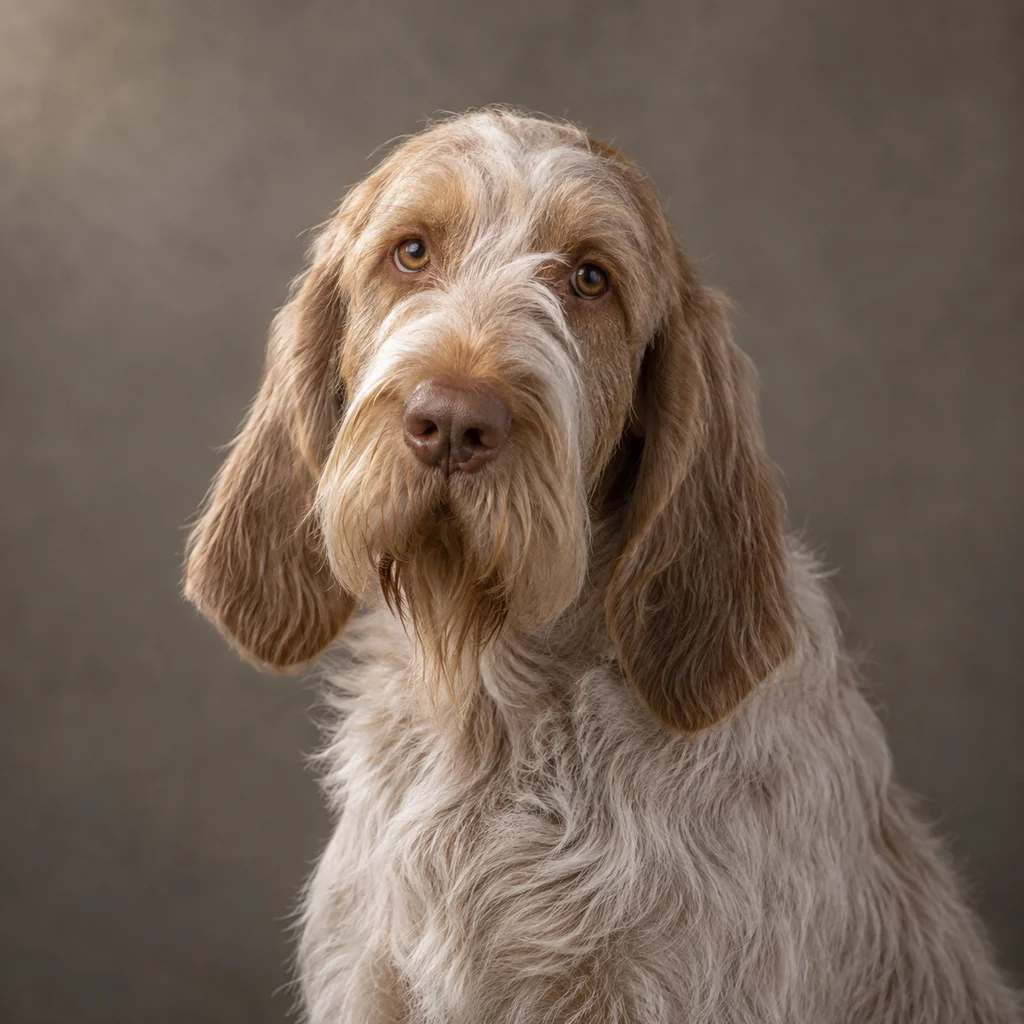
Spinone Italiano
Also called Italian Spinone, Italian Pointer, Italian Griffon.
Large dog, moderate energy, trains well with consistency.
- Docile
- Friendly
- Patient
- Sociable
- Devoted
- Size
- Large
- Weight
- 28 to 39 kg61 to 85 lb
- Lives
- 10 to 12 years
- Energy
- Moderate
- Trains
- Moderate
- Barks
- Low
Training
Training a Spinone Italiano
Gundog breeds. Quick to learn and quick to get over-excited. The work is calm around distractions, not obedience.
Gentle Methods Essential
Start here
Extremely sensitive: harsh handling causes shutdown, so reward generously and correct calmly and rarely.
Slow and Steady
Spinoni are deliberate workers, not high-drive dogs. Match your training pace to their thoughtful nature.
Patience Required
They're thinkers, not reactors. Allow processing time for commands rather than expecting instant response.
The app turns this into five to fifteen minutes a day.
Add your Spinone Italiano and it builds the plan around their age, where they came from and what they already know, on video with Atlas and Shango.

Free to start. iPhone. No card needed.
At home
Living with one
Bred to find, flush and retrieve game alongside a person. Biddable, busy, and happiest with a job.
Gets on with
- ChildrenVery High
- Other dogsHigh
- StrangersHigh
- CatsHigh
Breed averages. Early socialisation and the individual dog matter more.
- Exercise
- 1 hour daily. Moderate exercise needs compared to other sporting breeds. Enjoys walks and swimming.
- Grooming
- Moderate. Weekly brushing, hand-stripping for proper coat texture. Beard may need cleaning after meals.
- Drool
- High
- Coat
- Rough, Dense, Wiry, Water-resistantWhite, Orange and White, Brown Roan, Orange Roan
- In a flat
- Needs more space than a flat gives.
Health
Things to ask a breeder or vet about
Hip Dysplasia
Moderate
Joint condition common in large breeds
Cerebellar Ataxia
Severe
Neurological condition causing coordination problems, can be tested for
Bloat (GDV)
Severe
Deep-chested breed at risk for stomach torsion
Where they come from
History
One of the oldest pointing breeds, possibly dating back to 500 BC in the Piedmont region of Italy. Originally used to hunt game birds in difficult terrain. The distinctive rough coat and gentle expression have remained unchanged for centuries.